Search Engine Optimization (SEO) isn’t a new concept for most of us. If you are looking to enhance your products’ appeal in the local market, then local SEO is what your business needs! Local SEO refers to the optimization in which your company or product will be the first thing to be displayed on search results in a particular geographic area. It involves creating a My Business profile on Google, updating NAP, incorporating inbound and outbound links, and other steps discussed later in this article.
If you are wondering how to make the best use of local SEO, you have come to the right place. This blog will cover the importance of local SEO for any business, along with some useful tips on improving it! Read on to find out!
What Is Local SEO?
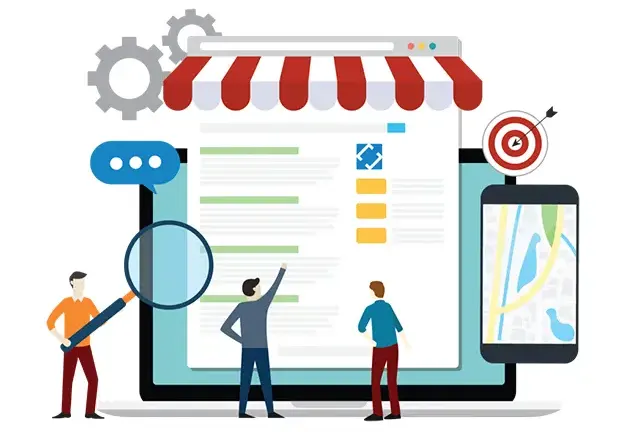
Local SEO is a Search Engine Optimization strategy that allows brick-and-mortar businesses to optimize their website to increase site traffic, brand awareness, and conversions from local search results. Moreover, local SEO extends to monitoring and managing online ratings and reviews and increasing local social media engagement.
On Google, local SEO means having your Google listing appear higher and more frequently in response to a large volume of relevant queries.
Simply put, local SEO is the means to improving your rankings on Google in organic search. Now that you have a brief understanding of what local SEO means let’s dig deeper and understand its importance for businesses with physical locations.
Why Is Local SEO So Important?
Google’s Search liaison, John Mueller, believes that search engines will never advance to a point where SEO is unnecessary or becomes obsolete.
The role of local SEO for business success cannot be overstated. Understanding the importance of local SEO is the first step toward improving it. It allows companies to reach out to target customers in their nearby locations, which helps increase their ranking position on search engines like Google. Practically, all businesses can reap the benefits of local SEO owing to the increasing use and popularity of Google.
Let’s look at the reasons why local SEO is crucial in today’s ever-changing and highly competitive market environment:
1. Increased Website Traffic and Better Conversion Rates
One of the benefits of local SEO is enhanced website traffic which is a requirement for the success of any business registered digitally. By focusing on potential local customers, you are encouraging local traffic to your website and facilitating individuals to visit your physical location.
Enhancing website traffic automatically results in better conversion rates as it drives potential customers to try out your product and services. According to a study, 28% of all local searches lead to sales. By incorporating local SEO effectively, you can present yourself as an expert in your town or city, drawing customers to visit you. Local searchers prefer visiting the location of a business as opposed to making random purchases or searching for companies that are located far away, hence making local SEO all the more important.

2. Reduction in Advertising Expenditure
Local businesses thrive on local customer influx. However, increasing local awareness involves spending a hefty amount on advertising channels such as TV advertisements, banners, pamphlets, etc. These channels account for a huge chunk of the total expenses of a business. The good news is that you can reduce advertising costs by improving your local SEO.
Studies show that 80% of mobile phone users select the “near me” option while searching for businesses in their area. Hence, by improving your local SEO, you can increase customer influx and reduce your overall advertising costs.
3. Allows You to Achieve Continuous Business Growth
Since local SEO is primarily focused on increasing local website traffic and improving search engine results, it leads to an increase in a business’s local sales and marketing prospects. Increased sales are an indication of increased interested customers who are likely to return to your business to re-purchase your product or service. Resultantly, your business will benefit from continuous business growth. Therefore, it is recommended to invest in local SEO metrics, which are a critical indicator of success.

4. Mobile Searches Result in Increased Sales
Mobile phones play a vital role in increasing online sales due to the convenience of ordering products anywhere at any time. Hence, businesses need to optimize their websites for mobile to benefit from increased online sales. You can benefit from increased sales by making the browsing and navigating experience more convenient for the customers.
5. Helps You Build a Strong Local Community
Many customers prefer buying products locally to support local businesses. By improving your local SEO, you can let potential customers know where you are located and inform them regarding the means to reach you. This ease of access ultimately results in your business building a strong community of loyal local customers.
6. Helps You Gain More Online Customer Reviews
According to a study, 87% of customers prefer reading online reviews before making purchase decisions in the case of local businesses. Offering high-quality products and services leads to satisfied customers who give positive and sincere reviews. These reviews ultimately help you generate more customers.
Google views active customer engagement as a sign of a better customer experience. Thus, by actively responding to online customer reviews and engaging with your customers, you can rank higher on search engine results compared to your competitors. Furthermore, encouraging local reviews will also take you a long way in increasing local customer influx.
Effective Tips for Improving Your Local SEO
1. Optimize Your Google Profile
One of the most effective ways to achieve higher ranks on Google is to create a Google My Business Account, which is one of the top factors impacting local SEO. A profile on Google will allow for improved visibility in Google’s local search results. Moreover, it also allows you to monitor customer reviews and add pictures to promote your business.
Setting up a Google Business Profile is relatively simple. To get started, simply add your business details like location, name, total operating hours, etc. You must ensure that your profile is 100% complete containing adequate information in all the required fields. Apart from making a good impression at first glance, a complete Google Business Profile facilitates customers by bringing them one step closer to interacting with your business and making a purchase decision.
According to various studies, customers often search for nearby items online when they are close to making a purchase. The information you add to your Google My Business Account is essential to improving your local SEO.
Here are a few steps you can take to optimize your Google Profile effectively:
- After creating your profile, verify the ownership of your business.
- Ensure that the information added to your profile is accurate and up-to-date.
- Encourage positive customer reviews to improve the reliability factor of your business.
- Address all types of reviews, good or bad, and respond authentically while also specifying the location. For example:
“Thank you for your feedback on XYZ product in ABC city. Your input is highly valuable to us, and we look forward to serving you again soon.”
- Use the Google My Business dashboard to update customers regarding upcoming events, new product introductions, events, special offers, etc.
- Once Google has verified your business, you may be rewarded with a coveted sidebar space in Google’s local search which adds authenticity to your site. For verification, your contact information needs to be accurate and up-to-date.
2. Strategically Place Your Location Your Website
The placement of your location information on various parts of your website is vital to help boost your local SEO. It is not sufficient to add your location to the homepage of your website. You should include your location information in headings, the main body copy, the Meta description, the footer, and the Meta title tag. Where relevant, you should also add the URL location. Additionally, adding Google Maps to your websites enables customers to search for you and gives you bonus points.
If your business has several locations, you must create location pages that include details like your name, address, phone number, parking information, promotions, individualized descriptions, operating business hours, customer testimonials, etc. While creating location pages, avoid duplicating content and add the relevant details to each page.
However, if your business has a single location, you can add an ‘About Us’ page with all the relevant details. For example, if you own a bake shop, you include your shop’s involvement in supplying baked goods for major events in your town.
3. Increase Social Media Engagement activities and Add Posts on Your Google Profile
After carving out an attractive Google My Business Profile, sharing your content on social media to promote customer engagement and reviews is time. Google places a huge emphasis on sharing content on social media, making it all the more important for businesses looking to improve their visibility and rankings.
Your posts should be creative, appealing, and informative enough to facilitate the further alignment of social media and Google Search. Furthermore, sharing your Google Profile on social media is also an effective way to improve your local SEO.
4. Ensure that you are making an Effective Use of Keywords on Your Site
Keywords are one of the main components of SEO. Generously use keywords that are relevant to local customers. If you want to find out popularly searched keywords of your region, we recommend using the Keyword Planner by Google. This tool allows you to filter keywords region-wise, leaving you with all the popular trends in your area.
Simply retrieving the list of keywords will not help your SEO. You need to effectively use them in your website’s URLs and Meta content. Lastly, it would also be helpful to include landmarks specific to your region to allow customers to identify where you are.
5. Encourage Online Reviews from Satisfied Customers
Satisfied customers are the ultimate goal of any business as this ultimately leads to increased profits. If you provide reliable and high-quality products and services, rest assured you will have a long list of regular and satisfied customers.
Happy customers play a vital role in promoting your business through word-of-mouth and writing positive customer reviews online, which is one of the best ways to utilize customer loyalty by improving your local SEO.
Here are a few ways to encourage customer reviews:
- Provide incentives to customers for writing reviews.
- Actively and sincerely respond to existing online reviews.
- Create online chat rooms on your website managed by customer care representatives to gather reviews and take note of queries and concerns.
6. Incorporate Internal Links
Although outbound links play a vital role in boosting your SEO, adjusting your internal linking structure is just as important as facilitating website navigation and allowing Google to understand and rank your website better. Moreover, internal linking also helps establish your website’s architecture and hierarchy, allowing you to place more link value on important pages and posts. Website owners have the power to control the internal linking structure to guide Google and users to visit valuable pages on the site.
By strategically placing internal links in your content, you can direct customers to other website pages containing information that can assist them in making a purchase and allow them to interact with your business, schedule an appointment, or book a meeting.
7. Optimize Your Site to make it Mobile-Friendly
According to a study, 61% of Google searches are carried out using a mobile phone, which makes it all the more important to optimize your website for mobile. Google’s statistics show that one-third of the mobile searches are related to location, meaning people use their mobile phones to search your nearby service in their city or town.
Moreover, people are also likely to use their smartphones to look up reviews of your business and other contact information. It would help if you also optimized your “near me” searches which have increased by 250% in the past five years.
If your website is poorly maintained and does not work well on mobile devices, you will lose out on many potential customers. A slow website can cause annoyance and frustration for customers, leading them to leave it.
Lastly, it may also result in potential customers shifting to a competitor’s properly functioning website. Thus, providing your customers with a smooth browsing experience is crucial to taking note of all the issues on your site and making it mobile and desktop-friendly.
8. Ensure That Your NAP Information is Up-to-Date
Another way to improve your local SEO is to ensure that all your contact information is consistently online. Consistency in data makes it easy for people to find you in their search results. To do this, you need to set up your NAP, which stands for your business’s name, address, and phone number. If your NAP is incorrect and inconsistent, Google will take note of this inconsistency across websites and raise red flags about the legitimacy of a business.
Moreover, it may also result in your business not showing up when searched by users on Google. Inconsistent information can hurt your Google rankings and reduce website traffic, so it is critical to avoid it.
9. Get Your Website Listed in Local and National Directories
To improve your site’s visibility and boost your local SEO, you must make the best use of online business directories by getting your business listed on all the relevant local and national directories.
Consistency is the key to optimizing online directories. You must ensure that the information provided on your company listing is consistent across all online directories. Avoid spelling mistakes, abbreviations in addresses, errors in phone numbers, and lack of suite numbers. Your online business directory should include your business name, address, contact information, a backlink to your website, and a brief description of what your business offers. In case of errors in your information, Google may not be able to verify its validity, and resultantly, your business may not appear in the local search results. It would help your local SEO to remove any duplicate listings in online directories. We also recommend getting a Chamber of Commerce membership to get an external inbound link for your region.
10. Optimize For Voice Search
Google Voice search is slowly replacing text searches as it captures speech faster than you can type. Hence, saving time and increasing productivity. To boost your local SEO, you need to optimize for voice search, taking into account ‘how’ people ask questions while voice searching compared to when searching by text.
People speaking into devices will likely search for something using a conversational tone with long-tail keywords. To optimize your search, you need to adjust your SEO to the tone people use while carrying out these searches. For example, voice search questions usually start with the ‘Five Ws’ (who, what, where, when, and why).
Furthermore, it is important to note that people often conduct voice searches when searching for something that requires a quick and precise answer or solution. To optimize voice search, answers to frequently asked questions such as business hours, location, etc., should be readily available.
11. Create Local Content Based on Local Events and Happenings
SEO marketing typically revolves around non-local content. While focusing on generalized content allows you to attract a wider audience and increase website traffic, it may not always help you to attract local traffic that can lead to conversions in the future.
To make the best out of your content marketing efforts, you must shift your focus toward the focus of your content on the local news to target the local audience.
You can create local content about industry news, gatherings, etc. You can increase website traffic and boost your local SEO by incorporating Google keywords into generalized topics related to your business.
12. Use High-Quality Backlinks
Another way to boost your local SEO and increase your website’s ranking position and visibility in search results is to use high-quality backlinks. Backlinks, also known as inbound or incoming links, are links created when one website is linked to another. Search engines like Google use these backlinks as a ranking signal since one website link to another and show that the content is of good quality.
There are many effective ways to build quality backlinks to your site; for example, you can add backlinks to your site on various social media platforms and write guest content on other reputable blogs and websites. Moreover, you can create high-quality content to encourage other businesses to link to your content and actively engage or interview influencers in your industry by sending them a link that they can link back to your website.
Furthermore, it is also recommended to do competitive backlink research to study the backlinks of your competitors who are at higher ranks. Here are a few tools to help you monitor your backlinks:
- Google Search Console
- SEMRush
- Ahrefs
13. Don’t Lump Everything Into a Single Place; Make Use of Dedicated Pages!
While lumping everything together in a single web page can be very tempting, it will not help your local SEO. Hence, it is recommended to create a dedicated web page for each of your products or services. Cluttered web pages with all products and services result in search engines not recognizing your brand as a specialist in a specific area, which may lower your rankings on Google.
Are You Looking to Boost Your Local SEO? Contact Us Today!
Are you looking for a way to improve your current business marketing strategy and increase your local customer base by boosting your SEO? Contact SP Marketing Experts today! We have an experienced team of digital marketers who specialize in SEO tools and link building to help drive traffic to your website and generate more leads.
We stay on top of emerging marketing technologies to help you reach your potential customers in the most innovative ways.
You can call us directly at 1-877-347-3376 or send an email to info@spmarketingexperts.com, and we will be sure to get back to you promptly.
Our business address is as follows:
9903 E. Bell Rd., Suite #120-B
Scottsdale, AZ 85260