Over the past year, businesses have been flooded with promises about artificial intelligence. Every platform, marketing tool, and agency claims that AI will transform how companies reach customers.
The pitch usually sounds something like this:
- AI will automate your marketing
- AI will replace your marketing team
- AI will run campaigns for you while you focus on the business
For business owners juggling sales, operations, hiring, and customer service, the idea of fully automated marketing sounds incredibly appealing. A tool that works 24 hours a day, produces content instantly, and analyzes data faster than any human team sounds like the perfect solution.
But there is a problem with this narrative.
AI is a powerful tool. It can improve efficiency, accelerate workflows, and help marketers process information quickly. What it cannot do is build a real marketing strategy.
Strategy requires judgment, context, experience, and an understanding of human behavior. Those things still belong to people.
Businesses that rely entirely on AI often end up with a lot of activity but very little progress. They produce more content, run more ads, and generate more reports, yet their revenue and lead quality remain unchanged.
Companies that succeed with AI do something different. They use AI as a tool inside a larger human-driven strategy.
This article explains where AI helps marketing teams work faster, where it consistently falls short, and why businesses that combine technology with experienced strategists continue to outperform the competition.
What a Human Marketing Strategy Actually Means
Many businesses believe they have a marketing strategy when, in fact, they have a collection of marketing activities.
They run ads. They post on social media. They publish blogs. They send occasional emails.
Those activities may be useful, but they do not automatically create results.
A true marketing strategy connects business goals to marketing actions. It creates a structured path that moves a potential customer from awareness to trust to purchase.
Strategy vs. Marketing Tasks
Marketing tasks are the things businesses do every day:
- Posting on social media
- Writing blogs
- Running Google Ads
- Designing email newsletters
- Updating website pages
These tasks can support growth, but only if they are part of a broader plan.
A marketing strategy answers deeper questions:
- Who is the ideal customer?
- What problem does the business solve for them?
- What message will resonate most with that audience?
- Where do those customers spend time online?
- What sequence of touchpoints leads them to buy?
Without clear answers to those questions, marketing becomes a random activity rather than purposeful growth.
The Core Elements of a Real Marketing Strategy
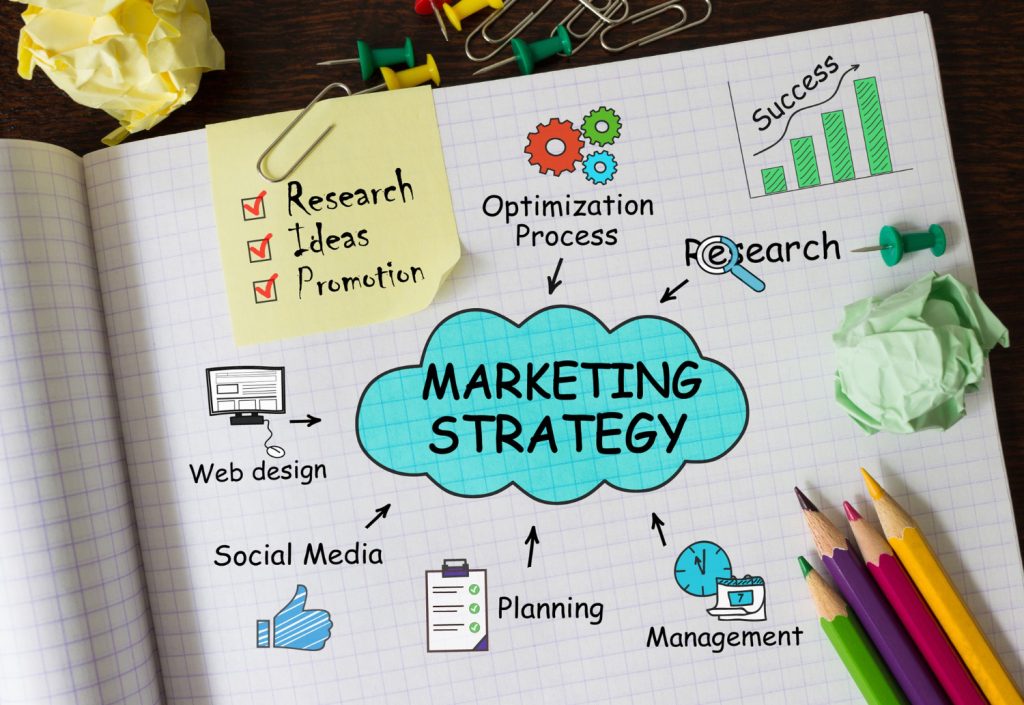
An effective marketing strategy typically includes several foundational components.
Customer understanding
This goes far beyond demographics. Real customer insight includes:
- What customers are trying to accomplish
- What frustrations do they experience
- What fears or objections slow down their buying decisions
- What alternatives are they comparing
Sales funnel design
Customers rarely buy the first time they encounter a business. Most move through stages:
- Awareness of the brand
- Research and comparison
- Trust development
- Final purchase decision
A strategy maps marketing content and messaging to each of these stages.
Channel prioritization
Many businesses try to be everywhere at once. That approach usually spreads resources too thin.
Strategic planning identifies the channels most likely to produce results, such as:
- Google search
- Social media platforms
- email marketing
- referral networks
- industry partnerships
Budget allocation
A strategy determines where to invest money for the highest return.
This includes:
- advertising spend
- content development
- website improvements
- marketing automation tools
Measurement and optimization
Strategy also determines which metrics actually matter.
Instead of focusing on vanity numbers like impressions or likes, strategic marketers measure:
- cost per lead
- conversion rate
- customer acquisition cost
- lifetime customer value
These elements require experience and interpretation. They cannot be generated automatically by a tool.
Where AI Helps Marketing Teams Work Faster

Despite its limitations, AI can be extremely valuable when used correctly. In fact, many marketing teams now rely on AI tools daily.
The key is understanding that AI works best as a productivity assistant rather than a decision-maker.
AI as a Content Assistant
AI can significantly speed up the content creation process.
For example, it can help:
- generate blog topic ideas
- create outlines for articles
- draft email subject lines
- suggest social media captions
- provide starting points for ad copy
These drafts can save marketers hours of work.
However, they almost always require human editing to refine tone, add real examples, and align messaging with the brand voice.
Without that human input, AI-generated content often sounds generic and forgettable.
AI for Data Analysis
AI excels at processing large volumes of information quickly.
Marketing teams often use it to:
- analyze campaign performance
- identify keyword opportunities
- detect patterns in customer behavior
- summarize analytics reports
What might take a human several hours to analyze can be processed by AI in seconds.
This allows marketers to spend more time interpreting insights rather than gathering data.
AI for Repetitive Tasks
AI also reduces manual work across marketing systems.
Common automated tasks include:
- tagging contacts in CRM systems
- categorizing leads
- scheduling social media posts
- summarizing campaign reports
- organizing customer feedback
Automation of these routine processes allows marketing teams to focus on creative thinking and strategic planning.
Where AI Falls Short in Real Marketing

While AI can improve efficiency, it struggles in areas that require judgment and contextual understanding.
Marketing often involves messy, unpredictable situations that do not fit neatly into data models.
AI Lacks Business Context
AI tools operate based on available data, but they rarely understand the full picture behind a business.
For example, AI cannot easily account for factors such as:
- seasonal demand patterns
- local market dynamics
- operational limitations
- staffing constraints
- new product launches
A recommendation that looks logical from a data perspective may be completely misaligned with real business priorities.
AI Cannot Interpret Human Motivation
Marketing ultimately revolves around human decisions.
Customers rarely make purchases based solely on logic. Emotions, fears, and personal values influence buying behavior.
Effective marketing messaging speaks directly to those emotions.
AI-generated content often struggles with this because it relies on patterns rather than genuine understanding.
The result is content that may sound polished but fails to build trust or connection.
AI Cannot Diagnose Broken Marketing Funnels
One of the most common marketing problems occurs at the transition between steps in the sales funnel.
For example:
- Ads may generate clicks, but landing pages fail to convert.
- Visitors may submit inquiries, but sales teams respond too slowly.
- Customers may abandon checkout because of confusing pricing.
These problems require human investigation and problem-solving.
AI tools may highlight declining performance metrics, but they rarely identify the underlying cause.
What We Found After Reviewing Small Business Marketing
When reviewing marketing setups for small businesses, several patterns appear repeatedly.
Many companies invest in tools, ads, and content, but still struggle to generate consistent growth.
Missing or Incomplete Sales Funnels
One of the most common issues is a fragmented customer journey.
Businesses may have:
- a website
- a few online ads
- occasional blog posts
- social media profiles
But these elements often operate independently.
Visitors may arrive on a website with no clear next step. Leads may submit forms but never receive follow-up emails.
A properly structured funnel connects each marketing activity to the next step in the customer journey.
AI Content Without Human Editing
Another issue involves businesses publishing large volumes of AI-generated content without editing.
The content may technically address relevant topics, but it often suffers from:
- repetitive language
- vague explanations
- lack of authority
- minimal brand personality
Search engines and readers both respond poorly to content that lacks originality.
Adding human insight, examples, and expertise dramatically improves engagement.
Lack of Campaign Planning
Many businesses operate without a marketing calendar.
Content and campaigns are created sporadically rather than strategically.
This often leads to:
- inconsistent posting
- missed seasonal opportunities
- lack of testing or optimization
Structured campaign planning helps businesses coordinate ads, content, and email marketing into cohesive initiatives.
Costly AI Marketing Mistakes Businesses Make

Overreliance on automation can also lead to expensive marketing errors.
Poorly Targeted Advertising
Automated advertising tools sometimes optimize for the wrong objective.
For example, they may prioritize clicks rather than qualified leads.
Without careful oversight, campaigns may target:
- audiences outside the service area
- people unlikely to convert
- irrelevant demographics
Small adjustments to targeting criteria often dramatically improve campaign performance.
Generic Ad Messaging
AI-generated ad copy frequently relies on vague buzzwords.
Examples include phrases like:
- innovative solutions
- industry-leading services
- cutting-edge technology
These statements sound professional but communicate little about real value.
Human marketers focus on specific benefits and clear calls to action.
Misleading Performance Reports
AI-powered dashboards often highlight impressive numbers that do not directly correlate with revenue.
Common vanity metrics include:
- impressions
- clicks
- social media engagement
Strategic marketers look deeper at indicators such as:
- lead quality
- conversion rate
- cost per acquisition
These numbers reveal whether marketing is actually producing customers.
Where AI Fits in a Smart Marketing Funnel
Understanding where AI fits within the customer journey helps businesses use it effectively.
Awareness Stage
At the awareness stage, potential customers first become aware of a business.
AI can assist with:
- keyword research
- content topic ideas
- headline variations
Human marketers still define the overall message and positioning.
Consideration Stage
In this phase, customers compare options and gather information.
AI may help with:
- drafting email sequences
- segmenting audiences
- generating retargeting ads
Human insight shapes the offer, tone, and trust-building elements.
Decision Stage
At the decision stage, customers evaluate whether to make a purchase.
This stage often depends heavily on:
- pricing presentation
- testimonials
- risk reduction messaging
- personal communication
Human judgment plays the dominant role here.
Why Strategic Thinking Matters More Than Ever
As AI tools become widely available, the volume of online marketing content continues to grow rapidly.
Almost every business can now generate blogs, ads, and emails at scale.
This means technology alone no longer creates a competitive advantage.
The real advantage comes from how businesses think about their marketing.
Strategic marketers focus on:
- Understanding customer behavior
- identifying unique positioning
- prioritizing high-impact channels
- refining messaging based on feedback
These decisions determine whether marketing becomes noise or a meaningful driver of growth.
Technology Is Powerful, But Strategy Wins
Artificial intelligence is transforming many aspects of marketing.
It accelerates workflows, simplifies data analysis, and automates repetitive tasks.
Used correctly, it can make marketing teams faster and more efficient.
But technology alone does not create successful campaigns.
Real marketing success still depends on strategic thinking, customer understanding, and thoughtful decision-making.
AI can execute tasks.
Humans determine what tasks are worth executing.
Businesses that combine intelligent tools with experienced strategists consistently outperform those relying entirely on automation.
Let’s Talk Strategy
If you are investing in marketing but are unsure whether your efforts are producing the best possible results, it may be time for a strategic review.
A marketing audit can help identify:
- gaps in your sales funnel
- underperforming advertising campaigns
- missed opportunities in content and SEO
- areas where automation is helping or hurting
Our team works with businesses to build clear marketing roadmaps that align with real growth goals.
If you would like an objective evaluation of your current marketing, reach out for a consultation.
Visit https://spmarketingexperts.com/contact/
Frequently Asked Questions
Can AI replace a human marketing strategist?
No. AI can assist with tasks such as drafting content or analyzing data, but it cannot fully understand business context, customer psychology, or competitive positioning.
What are the biggest limitations of AI in marketing?
AI struggles with nuance, originality, and interpreting complex real-world situations. It can generate ideas quickly but often requires human oversight to ensure accuracy and relevance.
What marketing tasks is AI best suited for?
AI works best for repetitive or data-heavy tasks such as keyword research, content drafting, campaign reporting, lead tagging, and scheduling marketing activities.
Why do many AI-powered marketing campaigns fail?
Many campaigns fail because automation is used without a clear strategy. AI tools may optimize for the wrong metrics or audiences if human marketers do not guide the process.
How should businesses combine AI with human marketing expertise?
The most effective approach is to use AI to increase efficiency while allowing experienced marketers to guide messaging, targeting, campaign planning, and long-term strategy.