Artificial intelligence is no longer a technology reserved for large corporations or technology companies. Over the past several years, AI has become increasingly accessible to small and medium businesses through cloud-based software platforms, integrated tools, and applications designed specifically for organizations without large technical teams.
What once required advanced engineering knowledge and expensive infrastructure can now be implemented through simple subscriptions or built-in software features. As a result, businesses across many industries are beginning to incorporate AI into their daily operations.
For many SMBs, artificial intelligence operates quietly in the background. It organizes information, automates repetitive work, assists employees with internal tasks, and communicates with customers through digital channels. In many cases, employees may not even realize AI is performing these tasks because the technology is embedded within the platforms they already use.
The goal of AI for most small businesses is not replacing employees. Instead, it focuses on improving efficiency, reducing administrative workloads, and helping teams focus on work that requires human judgment and creativity.
Understanding how AI is currently being used by businesses can help organizations identify where the technology may fit within their own operations.
Why Artificial Intelligence Is Expanding Among SMBs

Several technological shifts have made artificial intelligence practical for businesses that previously lacked the resources to adopt it.
Cloud Software Has Removed the Infrastructure Barrier
In the past, implementing artificial intelligence required businesses to purchase expensive servers and maintain their own computing infrastructure. Only large organizations with specialized IT teams could realistically deploy these systems.
Today, cloud computing has eliminated that barrier. Businesses can now access powerful AI systems through subscription-based software platforms that run on remote servers. This allows companies to benefit from advanced computing power without needing to manage the technology themselves.
Accounting software, communication platforms, project management systems, and customer relationship management tools now integrate artificial intelligence directly into their platforms.
This shift means SMBs can begin using AI simply by activating features within the software they already rely on.
AI Features Are Embedded in Everyday Business Tools
Another major factor driving adoption is the integration of AI directly into commonly used business software.
Many platforms now include AI-powered capabilities such as:
- automated financial categorization in accounting software
- intelligent search within document management systems
- predictive analytics in CRM platforms
- automated email responses within communication systems
- smart scheduling tools within appointment platforms
Rather than introducing an entirely new system, businesses can adopt AI gradually through tools they already understand.
Modern AI Tools Are Designed for Non-Technical Users
Earlier AI systems required programming expertise and specialized training. That barrier has largely disappeared.
Many modern platforms offer user-friendly interfaces that let users activate AI features with simple settings. Business owners and employees can implement automation without writing code or building complex systems.
This usability allows businesses to introduce AI gradually, testing it within one area of the organization before expanding to additional processes.
Automating Repetitive Administrative Work

One of the most common uses of AI in small and medium businesses involves automating repetitive administrative tasks.
Many daily business activities follow predictable workflows. Employees often spend hours performing tasks that involve sorting information, entering data, or transferring details between systems.
Artificial intelligence can perform many of these tasks automatically.
Administrative Tasks That AI Can Automate
AI-powered systems are commonly used to manage tasks such as:
- data entry and information sorting
- document classification and organization
- invoice processing
- appointment scheduling
- report generation
- internal workflow routing
Instead of employees manually handling these tasks, AI systems analyze incoming information and move it through the appropriate processes.
Accounting and Financial Administration
Accounting platforms provide a clear example of how AI improves efficiency.
Modern accounting systems use artificial intelligence to automatically categorize expenses, reconcile financial transactions, and identify unusual activity within financial records.
For example, when a business expense appears on a credit card statement, the software can analyze previous transactions and automatically categorize it under the correct expense category.
This reduces the amount of manual review required while helping businesses maintain accurate financial records.
AI systems can also flag unusual financial patterns that might indicate errors or irregular transactions.
AI Managing and Responding to Email Communication

Email communication remains one of the most time-consuming administrative tasks for many businesses. Employees often spend hours reading, sorting, and responding to messages.
Artificial intelligence is increasingly used to streamline this process.
Intelligent Email Sorting and Prioritization
AI systems can analyze incoming email messages and categorize them based on their purpose.
Examples include:
- identifying customer inquiries
- recognizing internal team communication
- prioritizing urgent requests
- filtering promotional messages
By automatically organizing messages, employees can focus on the most important communications first.
Automatic Responses to Routine Questions
AI tools can also generate responses to common customer questions.
For example, customers frequently email businesses asking about:
- pricing
- service availability
- appointment scheduling
- product information
AI systems can recognize the intent of these inquiries and generate appropriate responses immediately.
In some cases, the response is sent automatically. In others, employees review the suggested response before sending it.
Either approach significantly reduces response times and administrative workload.
Email Conversation Summaries
Long email chains can be difficult to follow, particularly when multiple people are involved in a conversation.
AI tools can summarize the key points of an email thread, allowing employees to quickly understand the context without having to read every message.
This improves productivity, especially for managers who must review large volumes of communication.
AI Answering Customer Questions
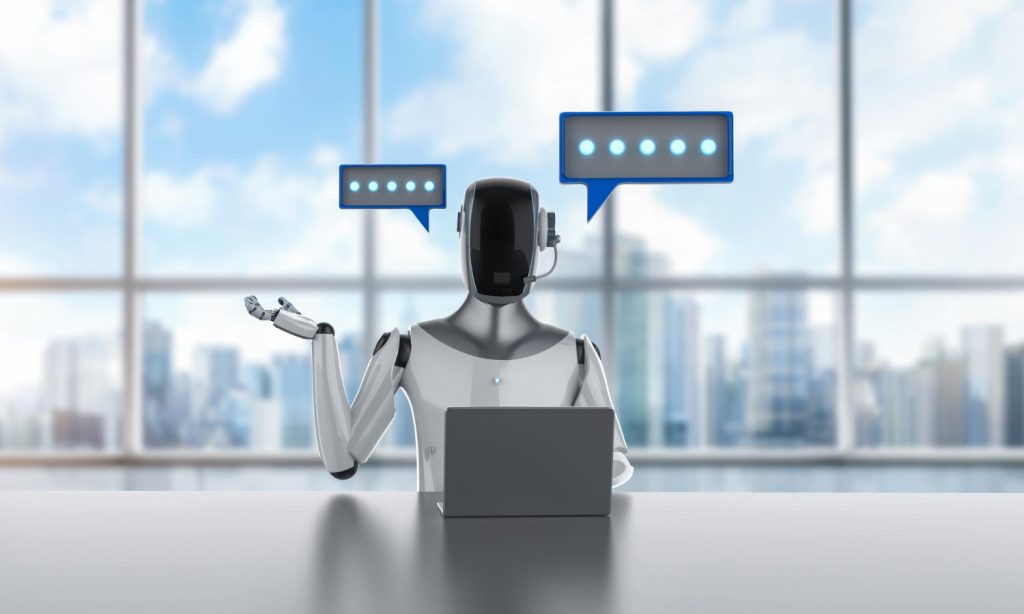
Customer communication is another area where artificial intelligence is transforming business operations.
Many businesses now use AI-powered chat systems on their websites and communication platforms.
Website Chat Assistants
AI chat assistants use natural language processing to understand customer questions and provide relevant answers.
Common uses include:
- answering service questions
- providing product details
- scheduling appointments
- checking order status
- directing customers to the correct department
These systems can operate continuously, allowing businesses to respond to inquiries at any time.
Reducing Customer Support Workloads
AI chat assistants can handle a large percentage of routine customer inquiries automatically.
While complex issues still require human support staff, many everyday questions can be resolved immediately by AI systems.
This reduces the workload for customer service teams while improving customer response times.
Using AI to Support Employees
Artificial intelligence is not only used for external communication. Many organizations are using AI internally to support employees.
Companies often maintain large volumes of documentation, including policies, training materials, and operational procedures. Finding information within these documents can be time-consuming.
AI-Powered Knowledge Assistants
AI systems can read and analyze internal documents, creating searchable knowledge bases for employees.
Instead of manually searching through files, employees can ask questions such as:
- What is the company vacation policy?
- How do we onboard a new client?
- Where is the equipment maintenance procedure located?
The AI system scans internal documentation and generates answers based on the relevant information.
Supporting Training and Onboarding
AI-powered knowledge systems also support employee onboarding and training.
New employees can ask questions about internal processes and receive immediate guidance based on company documentation.
This improves access to knowledge and reduces the time managers spend answering routine questions.
Inventory Management and Demand Forecasting
Artificial intelligence has also improved inventory planning for many businesses.
Traditional inventory planning often relies on historical averages and manual forecasting. AI systems can analyze much larger datasets and detect patterns that may not be immediately obvious.
AI Forecasting Demand
Machine learning systems analyze multiple variables, including:
- seasonal purchasing patterns
- regional sales trends
- historical product demand
- supply chain disruptions
Using this information, AI systems can generate demand forecasts and recommend adjustments to inventory levels.
Retail stores, restaurants, and e-commerce companies frequently rely on these systems to balance inventory levels while reducing waste.
Continuous Forecast Updates
As new sales data becomes available, AI systems automatically update their predictions.
This allows businesses to adjust purchasing decisions in real time rather than relying solely on static reports.
Financial Analysis and Forecasting

Artificial intelligence also provides new tools for financial analysis.
AI-powered financial platforms analyze historical data and generate predictive insights that help businesses monitor financial performance.
AI-Driven Financial Insights
These systems can generate insights such as:
- revenue forecasts
- cash flow projections
- expense trend analysis
- anomaly detection in financial transactions
This provides business owners with a more dynamic understanding of financial health.
Instead of waiting for monthly financial reports, businesses can continuously monitor trends.
Identifying Financial Irregularities
AI systems can also detect unusual patterns within financial transactions.
If spending suddenly increases or revenue patterns shift unexpectedly, the system can notify the business immediately.
This allows companies to investigate issues before they become larger problems.
Document Processing and Data Extraction
Businesses often handle large volumes of documents, including contracts, invoices, purchase orders, and compliance forms.
Manually processing these documents requires significant administrative effort.
AI Reading Business Documents
AI systems can read and interpret documents using optical character recognition and natural language processing.
For example, when an invoice arrives as a PDF attachment, an AI system can:
- identify the vendor name
- extract the invoice number
- record the payment amount
- send the information to accounting software
This eliminates the need for manual data entry.
Improving Document Workflows
By automating document processing, businesses can reduce administrative errors and accelerate internal workflows.
Employees spend less time transferring information between systems and more time managing important operational tasks.
Improving Operational Efficiency
Artificial intelligence is particularly effective at identifying inefficiencies within business operations.
AI tools analyze operational data to identify patterns and recommend improvements.
Process Optimization
Examples of AI-driven process improvements include:
- delivery route optimization
- production scheduling
- workflow analysis
- supply chain coordination
AI systems can analyze large datasets and identify opportunities to streamline operations.
Predictive Maintenance
In industries that rely on machinery or equipment, AI systems can monitor sensor data and detect patterns that suggest potential equipment failure.
Maintenance can be scheduled before breakdowns occur, reducing downtime and repair costs.
Planning Artificial Intelligence Adoption
Businesses interested in adopting AI should begin with careful planning.
Artificial intelligence performs best when applied to structured processes and reliable data.
Identifying Opportunities for AI
Organizations should begin by evaluating their operations and identifying areas where automation could improve efficiency.
Important questions include:
- Which processes involve repetitive work?
- Where does large data volume exist?
- Which tasks require frequent manual input?
- Where do operational bottlenecks occur?
Answering these questions helps businesses identify the most effective starting points for AI adoption.
Introducing AI Gradually
Rather than attempting to implement AI across the entire organization at once, many companies begin with a single operational area.
Common starting points include:
- customer communication automation
- document processing systems
- email management tools
- financial analysis platforms
As teams gain experience, AI capabilities can expand across additional departments.
Building the Digital Foundation for AI
Before artificial intelligence can operate effectively, businesses need a structured digital infrastructure.
Three elements often form the foundation for successful AI adoption:
- a well-structured website
- consistent social media activity
- organized customer communication systems
A Functional Website as the Digital Hub
A business website often connects multiple operational systems, including scheduling tools, payment platforms, analytics software, and customer databases.
These integrations create structured data that AI systems can analyze to identify patterns in customer behavior and operational performance.
Businesses exploring AI integration strategies can review resources available at:
https://spmarketingexperts.com/ai-services/
Social Media Data and Audience Insights
Social media platforms generate large volumes of engagement data.
AI tools can analyze this data to identify patterns related to:
- content engagement
- audience interests
- posting performance
Maintaining a structured social media strategy helps businesses generate valuable data that AI systems can later analyze.
Email Marketing as a Data Source
Email marketing systems provide detailed insights into customer behavior.
AI systems can analyze email engagement patterns, including:
- open rates
- response patterns
- content interests
- timing preferences
Platforms such as https://firedrumemailmarketing.com help businesses maintain structured customer communication while generating valuable engagement data.
Expanding AI Capabilities Gradually
Once a digital foundation is established, businesses can expand AI capabilities across different departments.
Common starting points include:
- AI-powered customer chat assistants
- automated email responses
- document processing systems
- financial forecasting tools
- internal knowledge assistants for employees
Implementing AI gradually allows businesses to learn how the technology works while minimizing operational risk.
Artificial Intelligence as Part of Everyday Business Operations
Artificial intelligence is quickly becoming embedded within the software systems businesses already use.
Rather than functioning as a separate technology, AI increasingly works behind the scenes within platforms that support daily operations.
For small and medium businesses, this shift provides new opportunities to automate routine work, analyze operational data, and organize internal knowledge more effectively.
Companies that build strong digital infrastructure today will be better positioned to integrate more advanced AI capabilities as the technology continues to evolve.
Artificial intelligence is no longer limited to large technology companies. It is becoming a practical operational tool for businesses of every size.
Helping Businesses Plan and Implement Artificial Intelligence
Many organizations want to incorporate AI but are unsure where to begin.
The challenge is rarely the availability of tools. The challenge is identifying where the technology fits within existing systems and how it should be implemented effectively.
SP Marketing Experts works with businesses to evaluate their current digital infrastructure, identify opportunities for AI automation, and implement systems that support daily operations.
This process often begins with reviewing the company’s website, communication systems, and internal workflows.
Once the digital foundation is organized, businesses can integrate AI tools that support areas such as customer communication, operational automation, document processing, internal knowledge management, and data analysis.
Organizations interested in learning how artificial intelligence can support their operations can review available services at:
https://spmarketingexperts.com/ai-services/
Schedule a Consultation
Artificial intelligence can significantly improve operational efficiency when implemented with the right planning and infrastructure.
Businesses interested in exploring how AI could support their operations can schedule a consultation to review their current systems and identify opportunities for automation and data analysis.
Schedule a time for a free consultation and begin building a structured approach to artificial intelligence within your organization.
Frequently Asked Questions
How are small businesses currently using artificial intelligence?
Small businesses commonly use AI for administrative automation, customer communication, financial forecasting, document processing, and operational optimization.
Do small companies need technical teams to use AI?
Most modern AI tools are built into cloud software platforms designed for non-technical users, allowing businesses to implement AI without dedicated engineering teams.
What business processes benefit most from AI automation?
Processes involving repetitive tasks, structured data, and predictable workflows typically benefit most from AI automation.
Is artificial intelligence expensive for small businesses?
Many AI capabilities are included within existing subscription software platforms, making them accessible to small and medium businesses without large technology investments.
What should a business do before implementing AI tools?
Businesses should evaluate their existing digital infrastructure, identify repetitive processes, and ensure that their data systems are organized before introducing artificial intelligence solutions.