SEO feels harder because competition is stronger, Google shows more answers directly on the results page, and AI tools now summarize search results. It still pays: search remains where most buyers look for a business. What works now is a focused strategy that fixes technical issues first, targets high-intent searches, builds real authority and is measured by leads, not rankings alone.
Updated October 2026: this article now also covers our earlier posts on why SEO still matters, how SEO has evolved, the patience SEO requires and whether fresh content helps rankings.

Why Does SEO Feel Harder Than It Used To?
A few years ago, a simple approach worked: build a website, optimize your pages, publish content and add some links, and rankings followed. That model still matters, but it no longer guarantees results, because you are now competing against:
- Businesses with many years of content and links behind them.
- Larger brands investing heavily in content and SEO.
- Results pages crowded with ads, map listings, videos and AI-generated summaries.
- Searches that end without a click because the answer appears on the results page.
Even a business doing everything right on the surface can struggle to gain traction, which is why SEO can feel slow and unpredictable.
Is SEO Still Worth It With AI Search?
Yes. Google still handles more than 5 trillion searches a year and remains where most people go when they are ready to buy, call or visit. AI tools change how answers are presented, but they rely on websites for their information. Google’s AI Overviews, ChatGPT, Gemini, Claude and Perplexity summarize content from sources they can find, understand and trust, which is exactly what good SEO produces.
What has changed is how you measure success. More searches end on the results page, so visibility in AI answers, map listings and featured snippets matters alongside traditional rankings. This is where answer engine optimization (AEO) and generative engine optimization (GEO) build on SEO: structuring your content so search engines and AI tools can lift your answers and recommend your business.
Why Do So Many SEO Campaigns Stall?
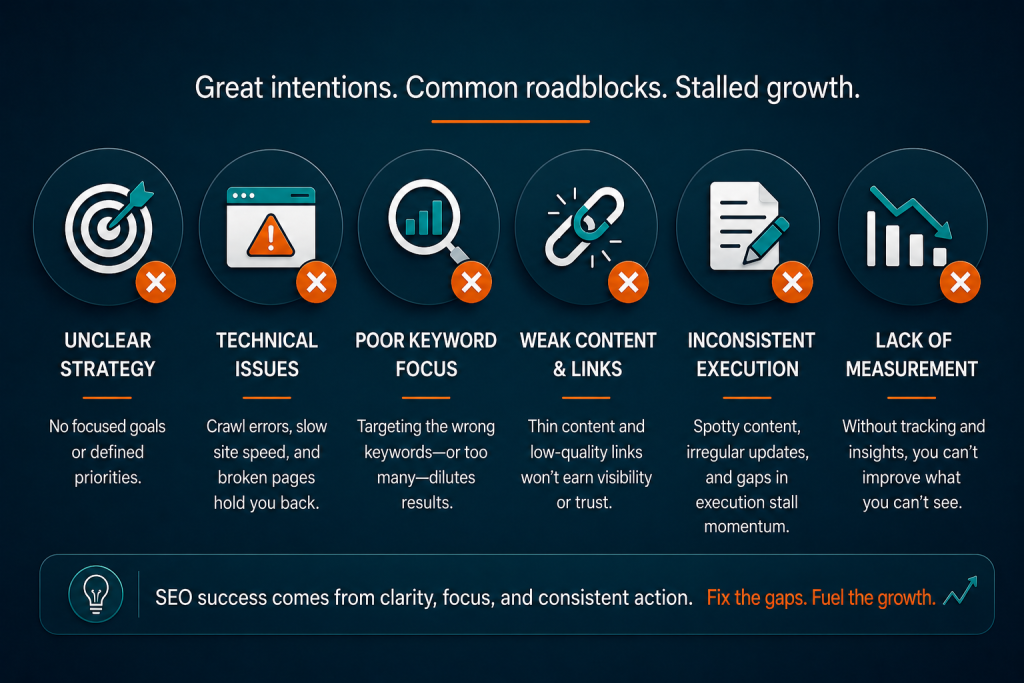
Most stall because they rely on volume and time: publish content, wait, and hope rankings follow. That creates real business problems: paying monthly without momentum, unclear reporting and fewer leads than expected. The usual causes are an unclear strategy, unresolved technical issues, keywords that do not match what buyers search for, thin content, inconsistent execution and no measurement tied to revenue.
How Long Should SEO Take to Show Results?
Expect early movement within three to six months and stronger results over six to twelve months, depending on your competition and where your site starts. Patience matters, but it is not a strategy on its own. You should see steady signs of progress along the way: more pages appearing for relevant searches, rising impressions in Google Search Console, and gradually more calls and form submissions from organic visitors.
Does Publishing Fresh Content Help Rankings?
Not by itself. Google rewards content that is accurate and useful, and it favors recent content when the topic changes over time, such as prices, laws or technology. Changing a date or rewriting a title without improving the page does not help. Updating pages that already rank, combining overlapping posts into one stronger article, and adding new pages for topics your buyers actually search for usually help more than publishing for volume.
What Does a Modern SEO Strategy Look Like?
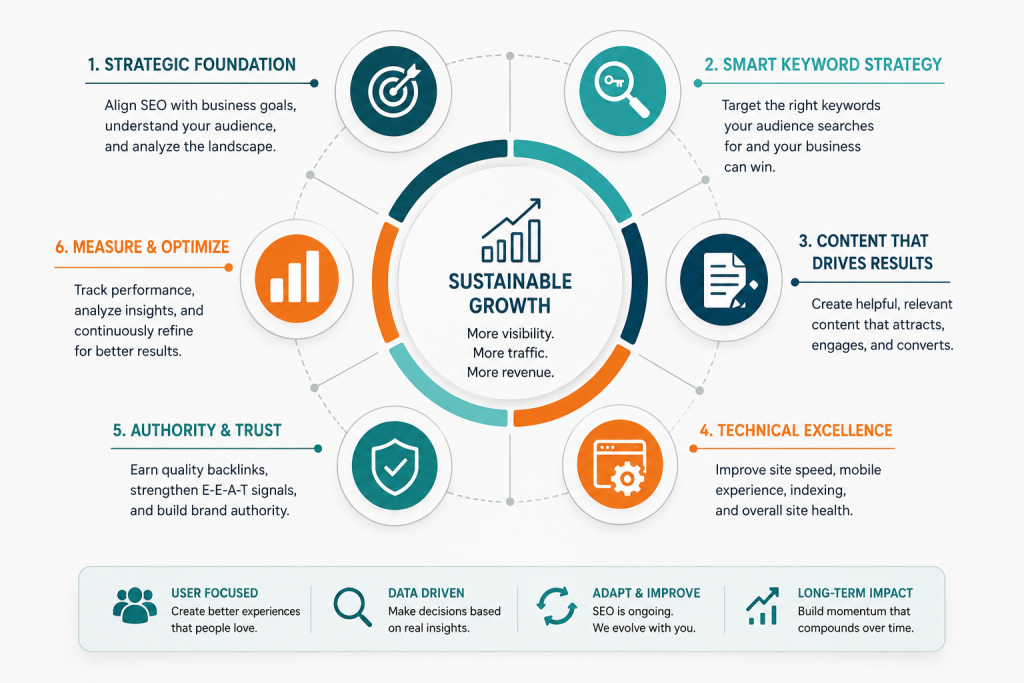
- Fix what can move rankings quickly: technical problems, page speed, internal links, titles on pages that already rank on page two, and your Google Business Profile.
- Build authority and trust: consistent business information across directories, reviews, relevant links and mentions, and clear author and business details.
- Publish with intent: service pages, location pages and articles that target searches people make when they are ready to buy, written so the answer comes first.
- Convert the traffic: clear calls to action, fast mobile pages and forms that work, so visitors turn into calls and leads.
- Measure what matters: track calls, forms and sales from organic search, not just rankings.
Why Do Local Businesses Have an Advantage?
Google weighs relevance, distance and prominence for local results, so a local business does not need to outspend national brands; it needs to out-position nearby competitors. Targeting high-intent local and service-specific searches, keeping your Google Business Profile complete and active, and earning reviews can produce visible gains faster than broad national keywords. See our local SEO services.
What Shortcuts Should You Avoid?
Hidden text, keyword stuffing, bought links and piles of low-quality AI-generated pages may work briefly, but search engines and AI systems keep getting better at filtering them out, and recovering costs more than doing it right. Accurate content from people with real expertise is what holds up.
How Should You Measure SEO?
Set a baseline before you start: current rankings, impressions and clicks in Search Console, and organic leads in Google Analytics 4. Then review monthly. Good reporting connects SEO to business outcomes such as calls, form submissions and booked appointments, not just positions. Also check periodically whether AI tools mention your business when you ask them the questions your customers ask.
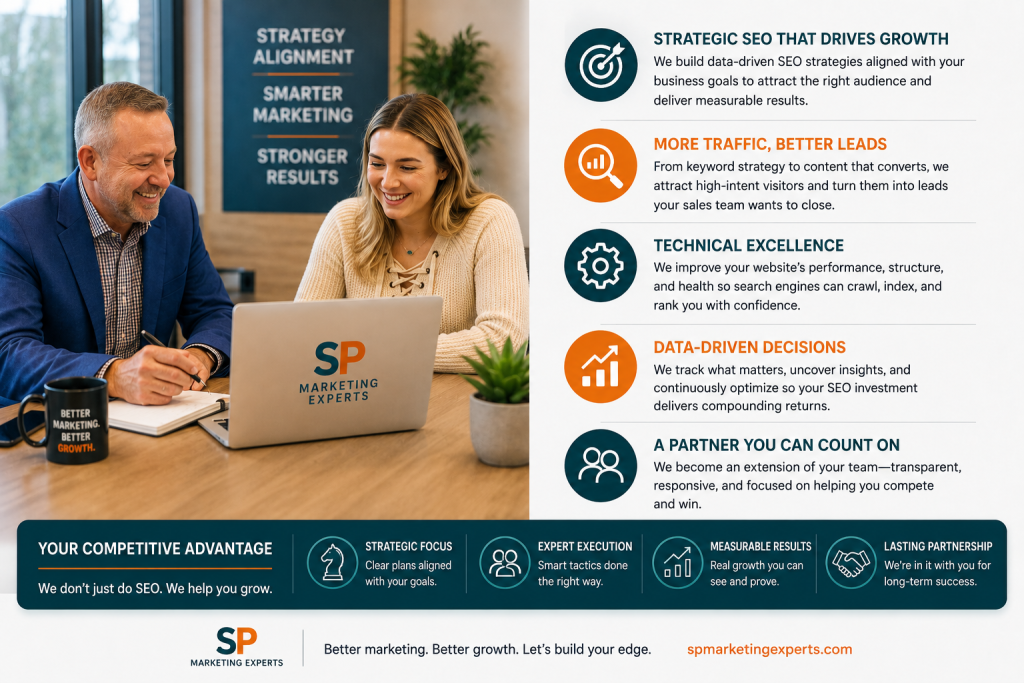
Not sure where your site stands? Start with a free SEO and AI visibility audit, and we will show you what is holding your rankings back and what to fix first.