Marketing and sales stay aligned when both teams share one pipeline, agree on what makes a lead sales-ready and follow a simple handoff with a clear follow-up deadline. Pick one or two shared goals, such as qualified conversations booked and close rate by lead source, review them together weekly, and fix the gaps that slow response or lose context.
Updated October 2026.
For early-stage startups and local business owners running lean teams, the fastest growth leaks often happen between marketing and sales teams, not in the ad account or the pitch deck. The core tension is misalignment: marketing pushes one message, sales tells another, and no one owns the in-between, creating team alignment challenges that quietly turn interest into drop-off. Lead handoff problems show up as slow follow-up, unclear expectations, and finger-pointing when the pipeline feels thin. When both teams pull in the same direction, startup growth friction drops and revenue becomes easier to predict.

Quick Summary: Align Marketing and Sales
- Set shared revenue goals so both teams prioritize the same outcomes and growth targets.
- Use unified messaging to keep every campaign and sales conversation consistent and trust-building.
- Agree on clear lead qualification criteria so sales can focus on the right opportunities.
- Plan content collaboratively so marketing supports the sales process and helps close more leads.
Understanding Marketing and Sales Alignment
To set the stage, here’s the core idea.
Marketing and sales friction usually comes from three simple problems: teams do not share the same updates, responsibilities are unclear, and rewards push different behaviors. True marketing and sales alignment is not a pep talk. It is an agreed way of working together, using shared definitions and regular touchpoints.
This matters because misalignment creates slow follow-up, inconsistent messaging, and wasted spend on leads that never get handled well. When you tighten role clarity, your website, ads, and outreach start reinforcing each other instead of competing.
Picture a prospect who fills out your web form after seeing an ad. If marketing labels them “hot” but sales expect a booked call, both sides feel let down. Shared criteria and quick check-ins turn that moment into progress, not blame.
With alignment in place, the lead handoff can be mapped stage by stage.
Plan → Qualify → Handoff → Follow Up → Improve
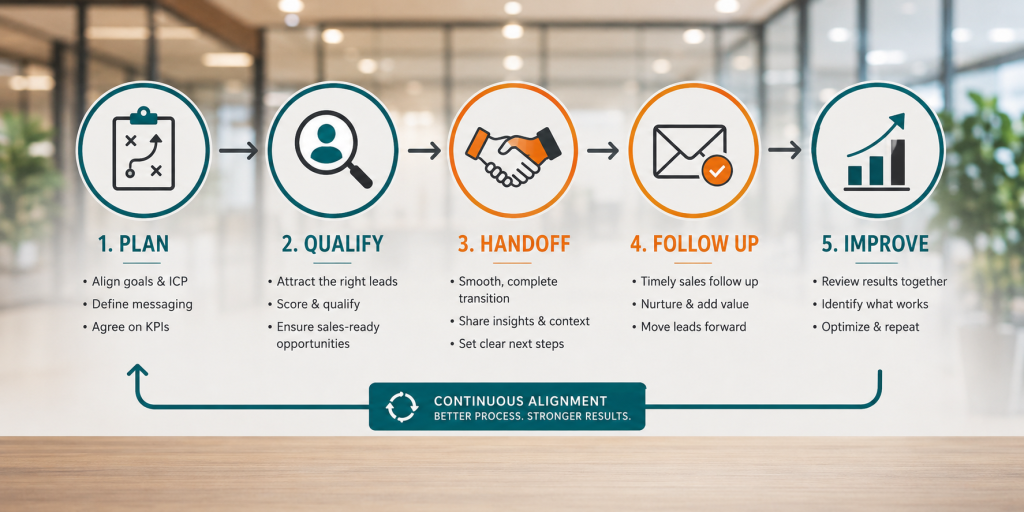
This workflow gives founders a steady rhythm for moving leads from your website and campaigns into real conversations without confusion. It helps your web design and digital marketing efforts generate prospects that get contacted quickly, tracked consistently, and learned from every week.
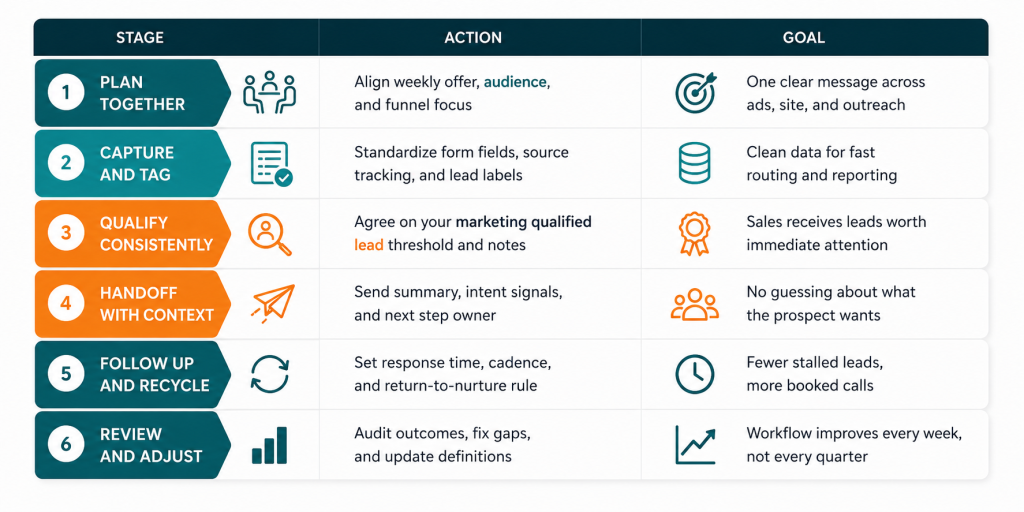
Each stage feeds the next: planning shapes what you capture, capture enables consistent qualification, and qualification makes the handoff usable. The follow-up rules protect momentum, while the review step keeps the system from drifting as your startup grows.
Start small, run it weekly, and let clarity compound.
Frequently Asked Questions
If you still feel a little unsure, these should clear things up.
Small steps and shared clarity turn marketing and sales into a calmer, faster growth system.
Turn Sales–Marketing Alignment Into a Reliable Revenue Engine

When marketing and sales run on different definitions, handoffs, and feedback loops, leads stall, and founder motivation takes a hit. The mindset that fixes it is simple: treat both teams as one revenue engine, built on shared goals, shared language, and consistent collaboration. Put that approach into practice, and sales and marketing synergy shows up fast: cleaner conversations, shorter cycles, stronger customer relationships, and clearer business growth strategies. Alignment turns scattered effort into predictable revenue. Choose one alignment habit to implement this week and protect it on both calendars. That small step creates the steady, collaborative success that makes growth more resilient.
Want help building a plan both teams can follow? Our marketing strategy consulting connects your messaging, lead flow and follow-up into one system.