Why FAQs Matter More Than Ever
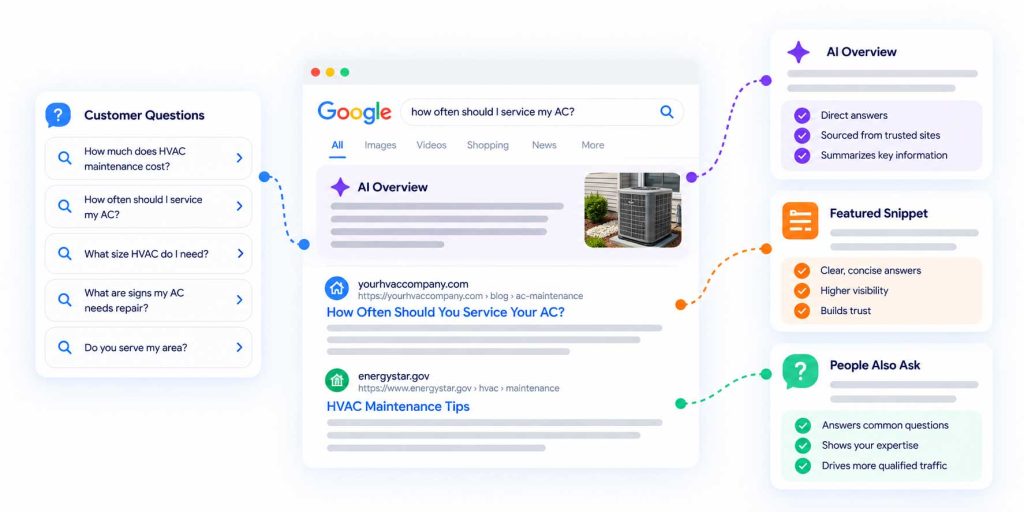
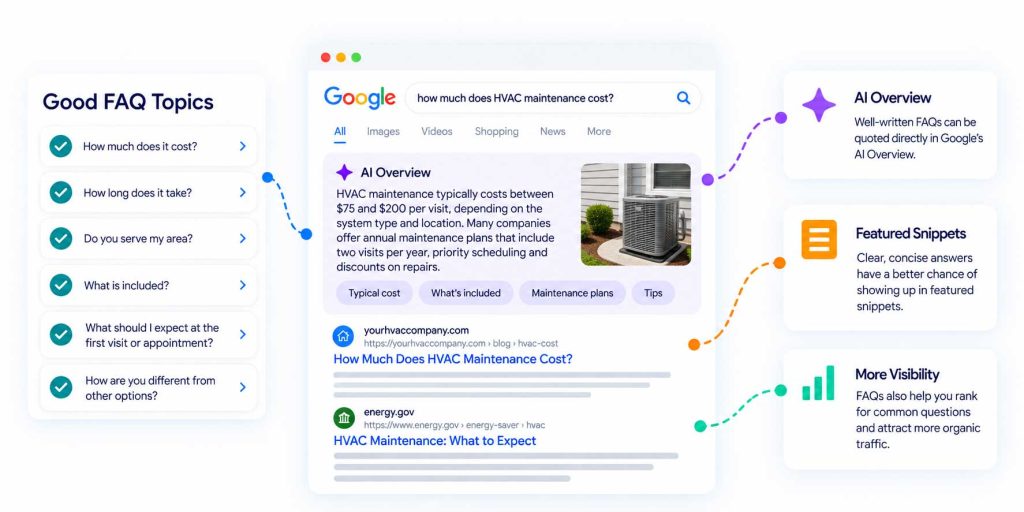
AI assistants and Google AI Overviews look for direct answers. A well-written FAQ gives them exactly that. It also answers the questions that stop visitors from calling: cost, timing, service area, what to expect.
Our FAQ Process




Good FAQ Topics
How to Write an FAQ Answer Customers Trust
What a Strong Answer Looks Like
A good FAQ answer does three things in a few sentences. It answers the question in the first line, gives the detail that matters and tells the reader what to do next.
Take “How much does a water heater replacement cost?” A weak answer says prices vary. A useful answer names what drives the price, such as tank size, fuel type and whether the venting needs work, then explains how to get an exact quote. If you are comfortable sharing a typical range, the answer is stronger still.
What We Need From Your Team
The most useful questions come from the people who talk to customers every day. Before we write, we ask for:
- The five to ten questions your front desk or sales team hears most
- Questions customers ask right before they decide not to book
- Policies that cause confusion, such as cancellations, warranties or payment options
- Topics you do not want answered publicly, such as exact pricing for custom work
A short call with whoever answers your phone often tells us more than any keyword tool.
Mistakes That Make FAQs Less Useful
- Sales copy dressed as a question. “Why are we the right choice?” rarely matches what anyone searches.
- The same FAQ on every page. Repeating one block across ten service pages adds nothing. Each page should answer questions about that service.
- Answers that contradict other pages. If an FAQ promises same-week appointments and the booking page shows two weeks out, customers notice, and so do AI tools.
- Answers that load only after a click. Some tab and accordion widgets pull text in with scripts, and crawlers can miss it. We make sure each answer is in the page itself.
Keeping Answers Current
Prices, service areas and policies change. We review FAQs when your business changes and during regular content updates, so the answers stay true. FAQ work pairs closely with answer engine optimization and structured data and schema markup, and larger writing needs are covered by content writing and blogging.